Table Of Content
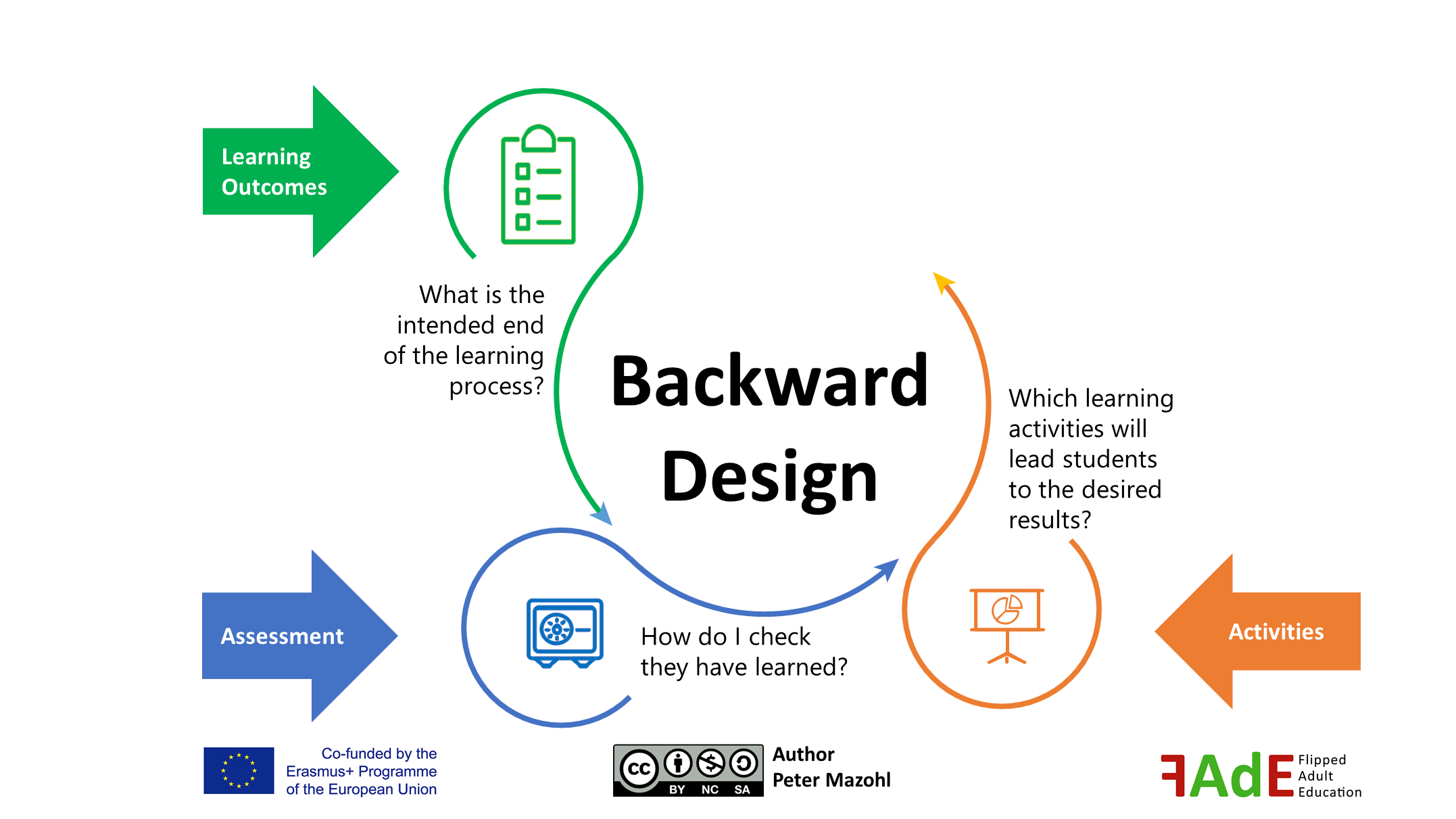
In their excellent book, Understanding by Design, Wiggins and McTighe propose the “Backward Design” framework for course design. This framework is “backward” only to the extent that it reverses the typical approach, so that the primary focus of course design becomes the desired learning outcomes. Only when one knows exactly what one wants students to learn should the focus turn toward consideration of the best methods for teaching the content, and meeting those learning goals. Normally, or with traditional lesson planning, you focus on standards and learning objectives. Design your tests and assessments first, then figure out your lesson plans, then teach your students. Some teachers may fear that backward design emphasizes “teaching to the test,” which puts unfair pressure on students to learn for the sake of the final assessment.
How to guides
Plus, it's a learning tool that schools and companies are using more and more, so it's good to know what it's all about. The inner circle identifies enduring understandings or big ideas that students should retain after they have forgotten many of the details (Wiggins and McTighe 1998, 9-10). Ohio State historyLong before Wiggins and McTighe popularized backward design, Ralph Tyler was working with fellow faculty at The Ohio State University to improve data gathered from assessments.
Dick and Carey model (also known as the systems approach model)
With this detailed set of ILOs, we see exactly how the three general ILOs in the first section will be measured. Relatively immeasurable outcomes (e.g., “Gain an appreciation…”) are analyzed into the homework and exam tasks through which students can show that they have gained such an appreciation. This second set of ILOs also provides much more detail, specificity, and measurability. In contrast, the 3 general ILOs help students understand the course’s scope and aim in a more digestible way. Notice that a general learning outcome (“tease out the laws of electromagnetism…”) is rather non-specific.
Backwards Design Step Three: Learning Strategies / Activities
"Working Backwards" and the Secrets of Amazon's Success - The New York Times
"Working Backwards" and the Secrets of Amazon's Success.
Posted: Mon, 22 Mar 2021 07:00:00 GMT [source]
Depending on your class and what you teach, you may have multiple assessments throughout the course or just one at the very end. If you have just a final assessment, make sure that you model teaching tactics or learning activities toward that test as much as possible. Instructional strategies are the teaching methods by which you present new information to your students. Methods can include teacher-centered approaches like demonstrations or lectures, or student-centered approaches like peer discussion and inquiry-based learning. An integration of “backwards planning” unit design with the “two-step” lesson planning framework – This article takes a look at the process of backwards planning in a detailed case study of a math class.
Backward Design as a Curriculum-Development Model
Laying out your Course Plan this way will enable you to see the big picture as you work, so you can ensure that all components of your course stay aligned. By beginning with the end in mind, teachers are able to avoid the common problem of planning forward from unit to another, only to find that in the end some students are prepared for the final assessment and others are not. You might wonder what the true difference is between traditional and backward design lesson plans. A 3-unit, online, self-paced course for K–12 educators interested in planning customized curriculum and/or lesson plans. Complete the Backwards Design Lesson Planning Template to walk through the three stages of the backwards design planning process to plan an upcoming lesson. This should be a lesson that you can implement within the next couple of weeks so that you are able to see the impact this planning process has on student performance.
2022 Volvo S90 Review: Google Tech Is a Step Backward - CNET
2022 Volvo S90 Review: Google Tech Is a Step Backward.
Posted: Thu, 10 Feb 2022 08:00:00 GMT [source]
Assignments are then developed, with the aim of allowing students to practice and demonstrate that learning. It is only toward the end of the backward design process that decisions about course content finally appear, guided by reflection on what students will need in order to perform well on the assignments. In other words, while traditional course design focuses on planning what and how to teach, with the hope that good teaching will lead to learning, backward design encourages teachers to focus the planning process directly on student learning. Abackward design lesson plan can be an excellent way to improve your student outcomes and learning processes. If you’re an online course creator, an online tutor, or a teacher of any other type, you probably develop your lessons in the same way.
Visit the department's Beginning Teacher information hub
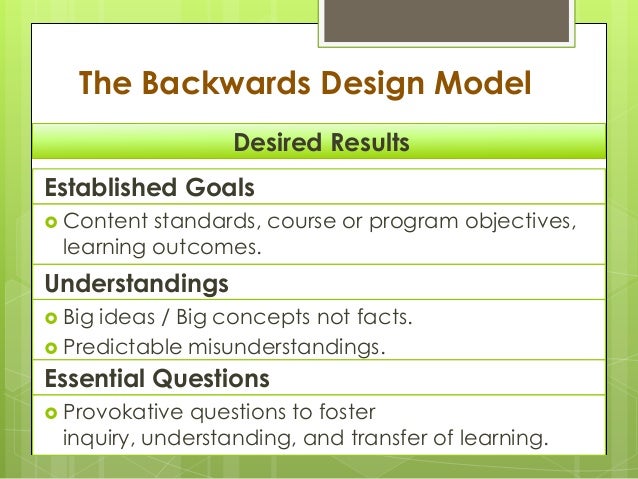
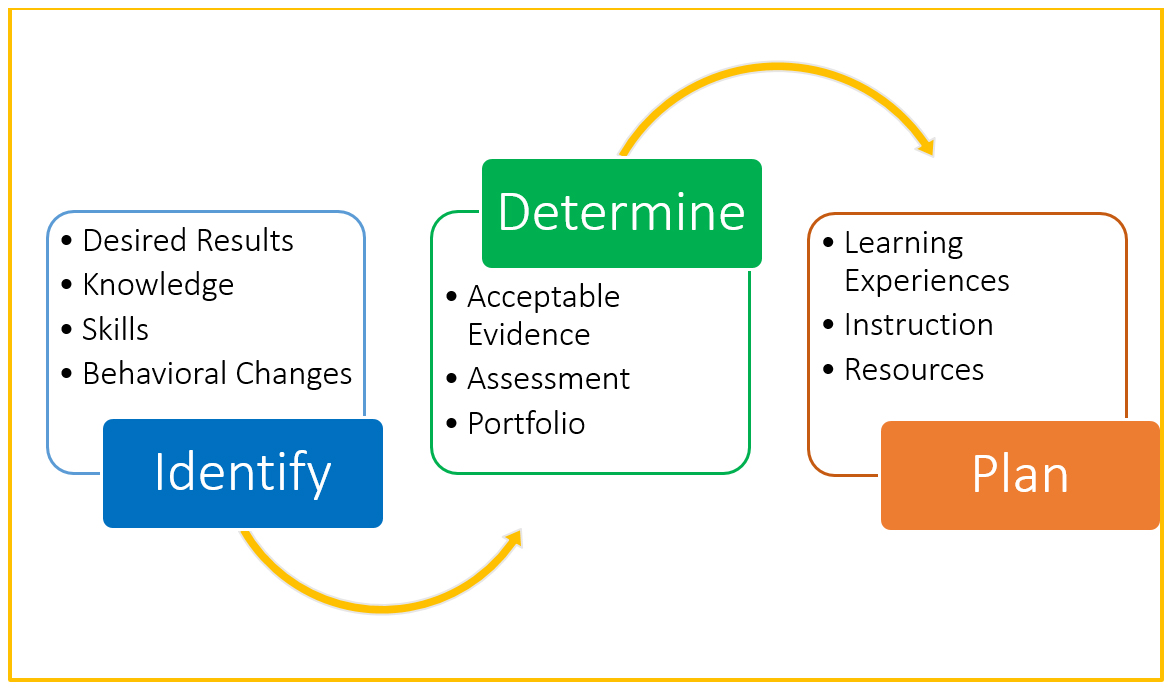
The first step of backward design involves taking a close look at the standard that students should have mastered by the end of a teaching segment. The teacher needs to clearly determine what defines success according to what the student needs to know and to what degree the student needs to be able to use what he/she knows. Before implementing a new curriculum design strategy like Backward Design, it's often beneficial to consult with school or organizational administrators. Doing so can ensure alignment with broader educational goals and compliance with any applicable standards or regulations.
With a good rubric in place, we then work backwards to determine what lessons students need to do excellent work on the final assessment. So if we re-do this unit plan with backward design, we’ll need to start by developing an assessment that would measure success with that standard. If we assume that a large portion of a student’s grade is based on the test, then students are not being measured on their achievement of that standard. Nor does it ask them to “demonstrate knowledge” of how the whole system works. The standard wants students to develop a model and use it to describe the system.
Writing Effective Learning Objectives
The whole time, they are using the lunar cycle vocabulary, correcting each other’s misconceptions, and just like scientists, thinking about how to explain concepts to other people. The test asks students a lot of questions that would show an understanding of these concepts, so we’re covered. Some chapters we did in class (I would read to them, then they would read silently), and others at home. Some students became as absorbed in the novel as I’d hoped they would; others, not so much.
In this model, traditional classroom activities and homework assignments are reversed. Teachers like Aaron Sams and Jonathan Bergmann have popularized this approach, which often involves students watching lectures at home and engaging in activities during class. While the Flipped Classroom also aims for active learning and engagement, it doesn’t necessarily start with specific outcomes in mind, making it different from Backward Design in its initial focus. Popularized by education reformers like John Dewey, Project-Based Learning focuses on complex questions or challenges that require students to engage in critical thinking, problem-solving, and collaboration.
One of the most frequently cited challenges of Backward Design is the time commitment required for planning. Educators like Linda Darling-Hammond have noted that preparing comprehensive plans and aligning them with assessments and activities can take substantial time. By being aware of these potential pitfalls, teachers, trainers, and curriculum designers can take steps to mitigate them. Instead of juggling a bunch of topics and hoping students will get something out of it, teachers can zero in on what truly matters. In 2005, Wiggins and McTighe published a second edition of their book to include new insights and updates. Around the same time, the approach started getting attention from policymakers.
The middle circle identifies what is important to know such as important knowledge (i.e, facts, concepts, and principles), as well as skills, processes, strategies, and methods. No matter your teaching modality, Ohio State has a professional learning program designed to support you with course design. Successful completion of each option below also earns you a teaching endorsement for Course Design in Higher Education. With this “after” version, every lesson is designed to prepare students to give excellent presentations at the end.




No comments:
Post a Comment